



He's Launched 100 Products Across 3 Continents: What Most Founders Get Wrong About Manufacturing | Kyro Studio

He's Launched 100 Products Across 3 Continents. Here's What Most Founders Get Wrong About Manufacturing.
How Hatch Product Development went from 6 people in a barn to one of Chicago's fastest-growing product development and contract manufacturing companies and what their founder learned along the way.
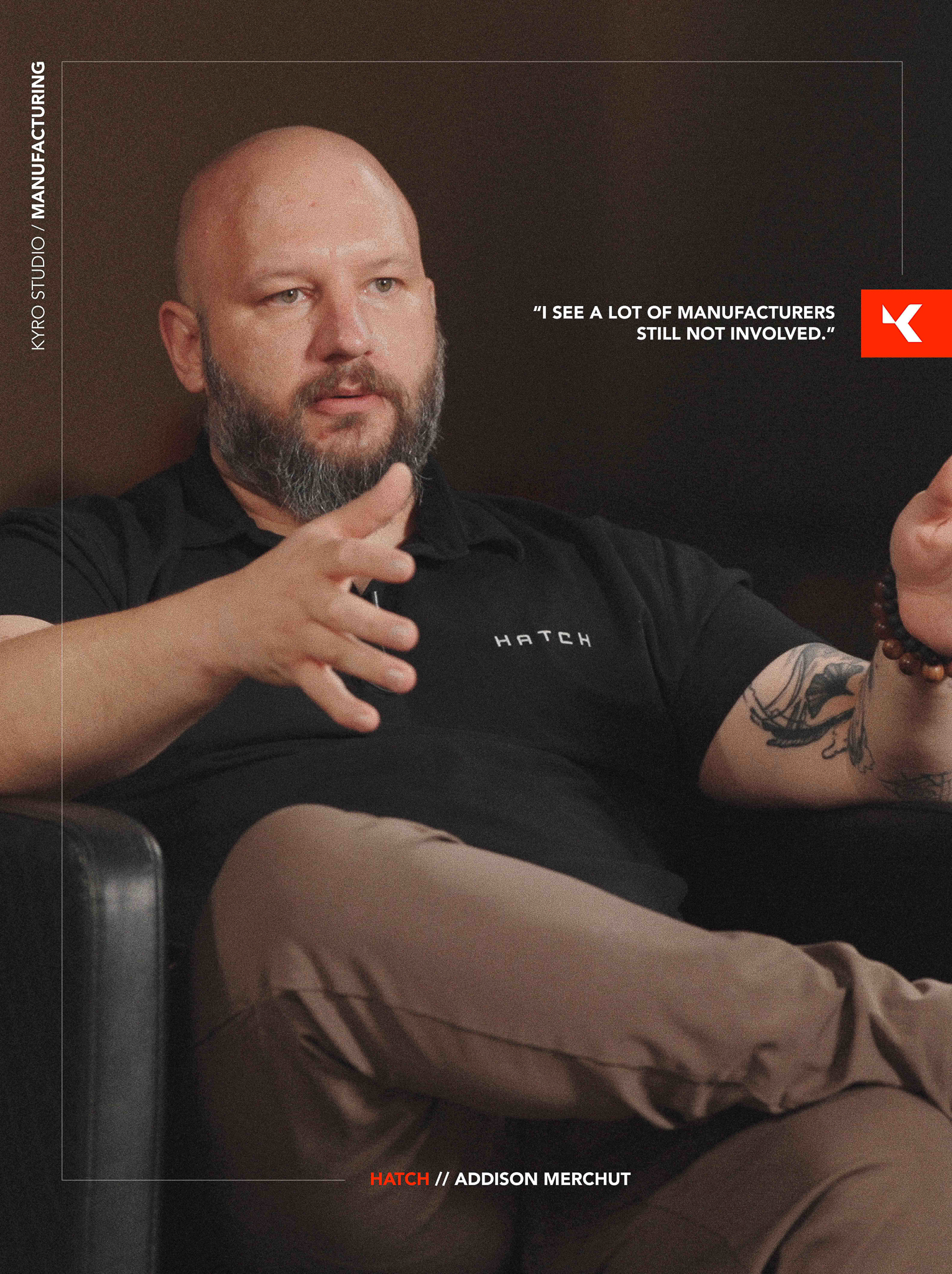
Addison Hofmann didn't set out to be in manufacturing.
He studied physics. Then engineering. Then spent years in manufacturing automation at Honda, Anheuser-Busch, and Texas Instruments watching 220-work-cell assembly lines run at scale. Then product development. Then Hatch.
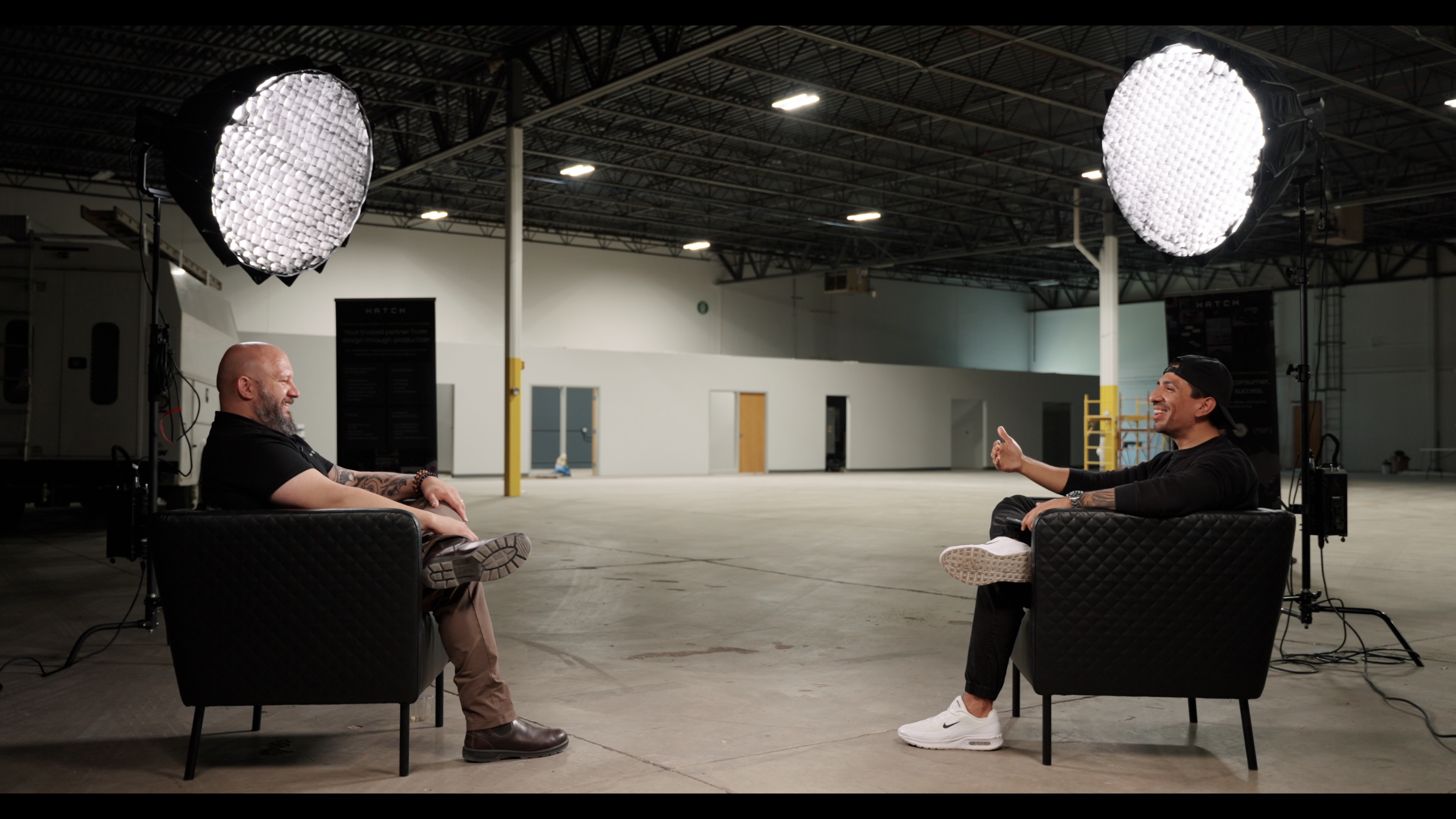
Five years ago, Hatch Product Development was six people in a barn outside Chicago. Today it's 75 employees, and they just signed the lease on a second building the empty warehouse where we filmed this conversation. By summer, it'll be full.
What Is Hatch Product Development?
Hatch is a design-build house and contract manufacturing partner based in the Chicago suburbs. They take a product from concept to engineering to manufacturing under one roof, serving clients ranging from first-time founders to multi-billion dollar companies.
What stays constant across every engagement is their philosophy: they see themselves as partners in building companies, not vendors fulfilling purchase orders.
The Three Types of Manufacturing Clients Hatch Serves
Addison breaks Hatch's client base into three distinct categories — and recognizing which one you are determines everything about how you should approach your manufacturing strategy.
1. Founders with ideas
Someone who's prototyped something in their garage, worked with a product incubator like mHub, and needs an engineering and manufacturing partner to take it to production.
2. Companies in the red zone
Three or four years in, product nearly ready, but no supply chain, no first purchase order, no clear path to manufacturing at scale. Hatch helps them cross that line.
3. Companies reshoring final assembly
Companies that have been manufacturing internationally and aren't getting the quality control, responsiveness, or throughput they need. They come to Hatch to bring final assembly back in-house and work with a domestic manufacturing partner who answers the phone in the same time zone.
The same three patterns show up whether the client is a first-time founder or a company doing billions in annual revenue.
The Biggest Mistake Founders Make After Crossing the Manufacturing Finish Line
The most common mistake Addison sees isn't technical. It's a mindset problem and it shows up right after a founder successfully gets their product into production.
He calls it the Team A to Team B transition.
Team A builds the company. Duct tape, a thousand hats, move fast and figure it out. It's the startup mentality, create it and they will come. It's necessary. It works. But it has a shelf life.
Team B builds the infrastructure. They come in after the duct tape phase and replace chaos with repeatable systems. They're different people with different skills and most founders resist making the transition too long.
"You need to literally turn and pivot your mind from, cool, we're focused on building this product, to now we're focused on selling this product."
The most common version of this failure: a founder so focused on making the product manufacturable that they reach the production finish line with no sales pipeline, no marketing engine, no purchase orders. They have 10,000 units and nobody to sell them to.
Addison's advice: sell early and sell often. By the time you're ramping production, you should already have a full marketing strategy running, a qualified sales pipeline, and ideally confirmed orders. It's easier to apologize to a customer waiting on delivery than to have nothing to deliver at all.
How Hatch Thinks About Manufacturing Marketing
Most contract manufacturers and product development companies focus their content on themselves their capabilities, their services, their facility tour. Hatch does the opposite.
Every post, every case study, every piece of content they publish is about the products their customers are building. The posters on the Hatch factory floor show finished customer products in use. Their Instagram showcases client launches. Their trade show presence is about the brands they've helped build not Hatch.
"I don't see that at a lot of other companies. Even the big contract manufacturers, I follow a bunch of them on LinkedIn and it's just all about them."
The mentality behind this approach is simple: we're part of your team. Not a vendor. A growth partner. If the customer succeeds, Hatch succeeds. That philosophy shapes how they sell, how they operate, and how they market themselves.
The Future of U.S. Manufacturing: What the Next Decade Looks Like
Addison is watching two major shifts he believes will define American manufacturing over the next 10 years.
Last-mile manufacturing
The resurgence of final assembly happening domestically close to the end customer with global vendor networks feeding into local operations. Hatch's model is built exactly for this. As supply chain risk management becomes a boardroom priority, domestic final assembly is becoming a competitive advantage, not just a cost center.
Automation ROI reaching mid-market manufacturers
Automation is no longer only accessible to Honda-scale operations. A study Addison ran for a client found that at 1 to 2 million units per year, a 15-stage automated assembly line could pay for itself in seven months against an 18-month product life cycle. That math didn't work a decade ago. It does now.
On AI, Addison sees the same pattern he saw in the early internet chaotic, foundational, and nowhere near finished. The interface between AI and physical hardware is the next frontier in manufacturing technology. Nobody has fully figured it out yet.
Key Takeaways for Manufacturers and Founders
- Start your sales and marketing process before your product is ready to ship
- The Team A to Team B transition is where most manufacturing startups stall
- Customer-focused content outperforms capability-focused content for contract manufacturers
- Last-mile domestic manufacturing is becoming a strategic competitive advantage
- Automation ROI is now accessible to companies far below enterprise scale
About Hatch Product Development
Hatch Product Development is a Chicago-area design-build house and contract manufacturing partner serving founders, startups, and established companies across industries. Learn more at hatchpd.com.